Posts

Top countries leading the renewable revolution

The climate crisis is currently one of the most pressing issues on earth. Every day, scientists are researching new technologies and advancing their understanding of energy in order to further the fight against climate change. However, not all countries are equally invested in moving forward with regards to renewable energy. There are some that seem disinterested, while others are spearheading what is being referred to as the renewable revolution. It doesn’t take a rocket scientist to see that our planet is suffering. The polar ice caps are melting at an alarming rate, the temperature is hotter than ever before, and natural disasters seem to be occurring with far more frequency than in previous eras. If we don’t act now, there may be precious little left for our children and grandchildren to inherit. Right now, these are the five countries doing the most to further the renewable revolution. Sweden Scandinavia has always been particularly impressive when it comes to fo...
Trends Affecting the Energy Sector in 2019

Every year, the energy sector is faced with a new set of challenges. Over the past few decades, the aim of the game has been to bring the cost of energy generation down whilst simultaneously increasing its efficiency. In 2019, however, the landscape looks slightly different. Thanks to the advent of the Internet of Things, and a number of other highly data-intensive developments, demand for energy is higher than ever before and increasing at an unprecedented rate. But, on the flip side, increased efficiency by way of widespread automation, among other things, intends to bring this demand back down. So, what do scientists predict to be the main trends that will affect the energy sector in 2019? Automation, Automation, Automation Automation is the word on everyone’s lips right now. From vehicles to factory machinery to even entire cities, everyone is working towards automation. In the long-run, this is expected to increase energy efficiency but right now automation is ...

Why Is the Uptake of Electric Vehicles So Slow?

Image
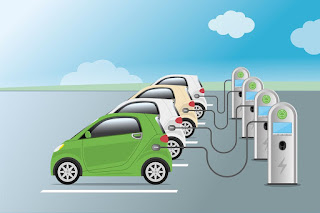
There has been a lot of talk about electric vehicles over the past few years. They were supposed to have stormed the roads and reduced emissions so we could tackle this climate change problem we have on our hands. But, so far there has been noticeably little action in the world of electric vehicles. The streets are not flooded with them and charging points around big cities are few and far between. What is keeping us from embracing electric vehicles when we know the benefits they offer? The key selling point of the electric vehicle is the fact that it emits zero emissions. This has a positive knock on effect on the air quality and the environment as a whole. On top of this, electric vehicles are generally cheaper to run and maintain, although the initial cost may be more than a traditional car. In the long run, these cars will help us save money. They are even quieter than regular cars! So, what’s the deal? Unfortunately, there are still some drawbacks when it comes to elect...

What Are Feed-In Tariffs?

There is a lot of jargon in the energy world and for the most part, many of the terms won’t come up in day-to-day conversation. Feed-in tariffs, however, are worth understanding and you will understand why as you read through this article.  There has been a huge push for clean and sustainable energy to become more mainstream. However, in order for this to happen there has to be some kind of incentive for businesses and industry leaders other than the general greater good of saving the planet. With an increasing awareness of and drive towards profitability, we need to make renewable energy as profitable as possible.  Feed-in tariffs (also called FITs) are part of what is known to some as the Clean Energy Cashback. Essentially, the scheme pays people for generating their own ‘green electricity’. FITs are on offer for everyone, including households, schools, businesses, care homes and anywhere else that needs electricity.  These tariffs were introduced in the UK with t...

The Smart Meter and Our Data Privacy

There is an increasing fear among members of the public that our data is being stored without our consent and then used to control and manipulate us. Last year, in France, there were huge demonstrations calling for people to stop using Linky, the smart meter that was introduced by French energy giant EDF. The concerns surrounding the technology were that the meter would act as a Trojan horse. It would sit in our house and harvest vast amounts of data about us that would eventually be used to manipulate our spending. The data that is recorded by a smart meter consists primarily of our gas and electricity usage. However, experts explain that they are actually collecting far more than this. Patterns in gas and electricity usage can tell analysts when people are most likely to be at home, how many showers households take, and which appliances they use most among other things. This can then be transformed into targeted marketing. In the wake of the roll out of the GDPR, compani...

Building Smart Cities, an Energy Transition

Image
Smart cities were once thought to have been a $1.6 trillion market by 2020. Everything from housing, transportation, urban planning, management, would contribute to a smarter neighbourhood enriching the lives of the citizens and residents. From self-driving cars to automated delivery drones, IT networks will become the backbone of the interconnected world. We are not there, yet. Technology is developing and evolving but there is a lack of a common direction, and funding, for many of the players in the market bridging that final implementation gap. Often overlooked by the general public in their desire for a smarter city is also the technical feasibility. Not only do information networks play an important part; but energy is the driver of all of our smart ambitions. To foster the growth of smart cities and to facilitate the transition we must also critically evaluate our energy production and consumption pattern. On a local scale, Electric Vehicles are gaining in popularity...

Talking Home Hubs Help Customers Reduce Energy Consumption

Image
There has been a notable rise in the use of voice activated technology over the past decade. Amazon ’s Alex and the Google Assistant have made running your house easier than ever. Just issue a command to your device and watch as it does exactly as it is told. We can request songs, order shopping, ask questions, demands news and podcasts be played - the possibilities are virtually endless. Just when we thought voice activation couldn't get anymore useful, utilities are throwing in their 2 cents and making our devices even better. There is now a fantastic opportunity for utilities to engage with their customers and you better believe they are going to take advantage of this. The recent partnership between Tendril, Indiana Michigan Power and Google was created to have a look at these possibilities. The aim of the partnership is to explore what these home hub devices can offer their users by way of energy saving advice. Rather than a standard response to check a website...